
The Practice · Ekonatura
The Ekonatura experience
A session begins by listening.
You’ve come because something is bothering you, because you’ve been dealing with a recurring problem for some time, or because you’ve noticed that your body isn’t responding as it used to.
During the consultation, there is time to discuss things, assess what is going on and start working on it.
First, we carry out an assessment to understand what is affecting you and decide where to start. We then move on to manual treatment, adapting the techniques to our findings and to how your body responds.
Firstly, the assessment
Before we begin, I’d like to find out what’s troubling you, how long it’s been going on, and how it’s affecting your day-to-day life.
Perhaps you haven’t been able to rest properly for months, you’ve stopped playing your favourite sport, or you’ve noticed that it’s becoming increasingly difficult to get through a working day without discomfort.
We’ll discuss what you’ve tried, what improved and how long that improvement lasted. We’ll also talk about what you need to regain.
We then begin the examination. We observe how you move, how you breathe and what happens in the areas we examine.
Palpation is fundamental to my work. During the assessment, it allows us to explore the tissues, assess differences in mobility, balance and tension, and identify the areas that need attention.
With all this information, we decide where to start, what we’re going to work on and what our aim is.
Then, the treatment
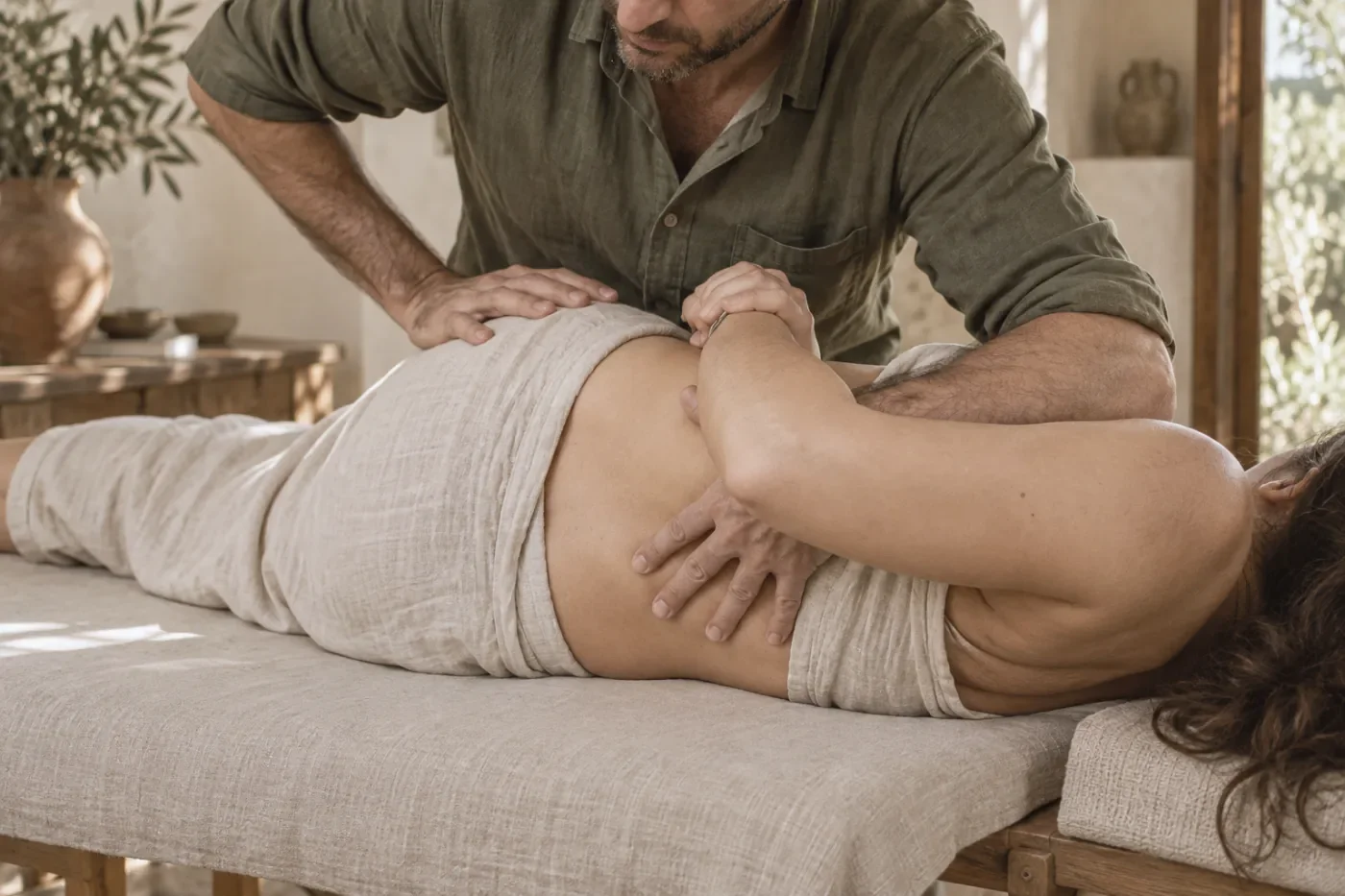
Once the assessment has been carried out, we begin the manual treatment.
I use specific techniques targeting the joints, muscles, fascia and other structures that we have agreed to address.
Two people may present with the same neck pain but have very different circumstances.
One person may have localised tension that requires direct treatment. Another may also notice a clenched jaw, stiffness in the upper back or restricted movement of the ribs when breathing.
That is why the treatment is tailored to each individual.
I integrate structural, fascial, visceral, cranial and sacrocranial techniques according to the specific characteristics of each case.
The assessment continues whilst we work. Palpation allows me to keep observing how the tissues respond, and what you notice also provides us with information.
We can start with one area, adjust the technique or alter the intensity as the session progresses.
Working without fighting your body
The treatment is 100 per cent manual. Most of the techniques I use are gentle.
I work primarily through touch, palpation and progressive tissue techniques. I adjust the pressure, intensity and rhythm depending on the area being treated and how you’re feeling.
Some techniques may feel a little uncomfortable. You can let me know at any time and we’ll adapt the treatment accordingly.
I do not believe that causing pain leads to better results. The key lies in adjusting the intensity on an individual basis.
What you notice matters too
You come in with a specific complaint and we start by addressing that. During the session, we also pay attention to other sensations that may arise: deeper breathing, less tension in the jaw, a more relaxed abdomen or a general feeling of lightness and comfort.
Palpation allows me to observe how the tissues move and respond. Your own perception complements this information.
I’m particularly interested in finding out:
- How you move and what changes you’ve noticed in your symptoms. Whether you’ve noticed greater freedom of movement, how much an area has improved, or what remains exactly the same.
- How you perceive your body. Whether you’re breathing more deeply, your jaw feels more relaxed, or you notice less overall tension.
- How you feel afterwards. Whether you’ve slept better, how long any improvement lasts, or how your body responds when you return to work, dancing or sport.
Everyone responds differently. What you tell me during the session and at subsequent appointments helps us to assess your progress and decide how to proceed.
Manual therapy and movement
Treatment on the treatment table is manual. Where it is appropriate to incorporate an active component, we also work with adapted movements and exercises.
You may need to regain confidence in your movement, take up physical activity again, or improve your ability to perform certain movements without so many limitations.
We select a few exercises, practise them together and I correct them as necessary during the consultation.
You can then continue at home with what we’ve already worked on.
A diagnosis provides information, but you need to assess how you’re feeling
You can bring an MRI scan, a medical report or a diagnosis that explains some of your symptoms.
All this information is useful and I take it into account.
During the assessment, we observe how you move, which activities you find difficult and what we find when examining the areas related to your problem.
Two people with the same diagnosis may experience different symptoms and limitations. That is why individual assessment plays a key role in my approach to treatment.
The aim
To reduce the discomfort that is holding you back, restore your mobility and help you return to the activities you need or enjoy.
I also want you to feel free to ask questions during the session, tell me what you’re noticing and understand what we’re working on.
With time, care and a treatment plan tailored to you.
You’ve come because something’s bothering you. We’ll start there and assess the bigger picture.